Ask ten rental agents which 15-passenger van is "better" and nine will say the Mercedes-Benz Sprinter, because it is the nicer van. Ask which one you should rent and the honest answer is: it depends on the trip. The Sprinter is the long-haul comfort choice. The Ford Transit is the value choice that also happens to tow, park more easily, and cost roughly a hundred dollars a day less.
This guide puts the two side by side on the things that actually change a trip: price, fuel, comfort, headroom, luggage, towing, and height clearance, using our own fleet's numbers where we have them. Where a number is rounded or varies by model year, we say so.
Sprinter vs. Transit at a glance
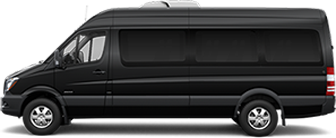

| Mercedes-Benz Sprinter 2500 15-passenger, high roof |
Ford Transit 350 15-passenger, medium roof |
Ford Transit 350 HD 15-passenger, high roof |
|
|---|---|---|---|
| Engine and fuel | 2.0-liter four-cylinder turbodiesel, automatic | 3.5-liter V6 gasoline, automatic | 3.5-liter V6 gasoline, automatic, dual rear wheels |
| Highway fuel economy | Low-to-mid 20s mpg lightly loaded, high teens full | High teens mpg lightly loaded, mid teens full | Mid-to-high teens mpg |
| Fuel tank | 24.5 gal diesel (about 500 miles of range) | 25 gal gasoline (about 400 miles) | 25 gal gasoline |
| Length | About 22 ft 10 in (274 in) | About 19 ft 8 in (235.5 in) | About 22 ft (264 in) |
| Height | About 9 ft 3 in | About 8 ft 5 in | About 9 ft 1 in |
| Standing headroom | Yes, over six feet down the aisle | Most adults can stand; tall riders duck | Yes |
| Seats | Leather benches with individual headrests, cupholder at every seat | Cloth benches, three rows behind the front seats | Leather benches, four rows |
| Driver aids | Adaptive cruise control, blind-spot and attention assist, rear camera, Apple CarPlay, electric sliding door | Rear camera, reverse park sensors, power outlets | Rear camera, Bluetooth audio |
| Luggage with 15 aboard | Small space behind the rear bench; for real gear pick a Sprinter Crew or Band Van with a cargo hold | Modest; the two middle seats of the rear row come out on request; tow hitch option | Decent space behind the rear row; tow hitch |
| Towing | No hitch on any Sprinter | Class III hitch, trailers up to 3,600 lb, $10 per day | Yes, same hitch |
| Drive | Rear-wheel drive | Rear-wheel drive | Rear-wheel drive, dual rear wheels |
| Bandago weekly rate, from | $259 per day | $149 per day | $219 per day (4 cities) |
Dimensions are manufacturer figures for the configurations we run (Sprinter 170-inch wheelbase high roof; Transit long-wheelbase medium roof and extended-length high roof), rounded. Fuel economy is what our renters report, not an EPA rating (neither van gets one). Rates are our current lowest published weekly (7 to 27 day) rate across cities; shorter rentals cost more per day. See what a 15-passenger van costs for the full picture.
Price: the Transit wins by about $110 a day
On our rate sheet today the 15-passenger Transit medium roof starts at $149 per day on weekly rentals and the 15-passenger Sprinter at $259. Short rentals widen the gap: in the quotes we pulled for a late-September trip the Sprinter ran $90 to $140 a day more than the Transit in the same city. Our damage waiver is $20 per day on the medium-roof Transit and $29 on the Sprinter. Over a seven-day trip the Sprinter premium is roughly $700 to $1,000 before tax. That buys real things, which we get to below, but it is the single biggest difference between the two vans and the place to start.
The high-roof Transit (available in Chicago, Columbus, Denver, and Miami) sits between the two at $219 per day weekly: Sprinter-like headroom and leather seats, gasoline running costs, and a tow hitch.
Fuel: diesel vs. gas is closer than people expect
The Sprinter's turbodiesel is the more efficient engine, and on a long highway day lightly loaded it will show low-to-mid 20s mpg where the gasoline Transit shows high teens. Diesel also usually costs more per gallon, which eats into the advantage. A worked example, using round numbers (plug in the prices on the sign when you travel):
- 1,000 miles in a Sprinter at 21 mpg is about 48 gallons; at $3.90 diesel that is roughly $185.
- 1,000 miles in a Transit at 16 mpg is about 63 gallons; at $3.30 regular that is roughly $205.
Twenty dollars per thousand miles. On a 3,000-mile tour the diesel saves maybe $60, which the Sprinter's higher daily rate erases in the first hour. Fuel should not decide this choice. Range is the more practical difference: the Sprinter's 24.5-gallon tank at low-20s mpg covers close to 500 miles between stops, the Transit closer to 400, which matters on empty stretches of I-10 or I-80. Two diesel-specific notes: the Sprinter uses diesel exhaust fluid (we keep it topped up; a warning light means add some, not stop), and misfueling a diesel with gasoline is an expensive, tour-ending mistake that our damage waiver does not cover. Our Sprinter care guide and Transit care guide cover both vans' habits in detail.
Comfort: the Sprinter earns its premium on long days
This is where the Sprinter's reputation comes from. It is quieter at highway speed, rides more smoothly, and its leather benches with individual headrests and a cupholder at every seat are noticeably easier to spend eight hours in than the Transit's cloth benches. The driver gets the bigger win: adaptive cruise control holds a gap to the car ahead and will bring the van to a stop in traffic and start again, and blind-spot and attention assist take the edge off a vehicle this long. On a tour with two 500-mile days back to back, drivers arrive less wrecked in the Sprinter, and that is worth money.
The Transit is a perfectly comfortable van for the trips most groups take: an airport run, a weekend tournament, a three-hour drive to a wedding, a week of regional shows with a few hours of driving a day. The medium-roof version gives up headroom and a little luxury; it does not give up anything on the things that end trips. The high-roof Transit, where available, is the middle path.
Headroom and height clearance
In the Sprinter's high roof, an adult over six feet can walk down the aisle standing up. In the medium-roof Transit most people can stand; tall riders duck. That sounds minor until you have loaded and unloaded fifteen people a dozen times in a day, or someone needs to change a shirt in the van.
The outside height is the flip side. At roughly 9 feet 3 inches, the Sprinter does not fit in any ordinary parking garage, and neither does the high-roof Transit at about 9 feet 1 inch. The medium-roof Transit at about 8 feet 5 inches clears some structures posted at 8 feet 6 inches and up, which in a dense city can be the difference between parking at the hotel and parking three blocks away. Read the clearance sign every time; the sign wins. Drive-throughs, hotel porte-cochères, and low branches are the other usual suspects, and roof damage is excluded from every rental company's damage waiver we know of, including ours.
Luggage, gear, and towing
Start with the uncomfortable truth: fifteen people and fifteen suitcases do not fit in any 15-passenger van with every seat in place. With a full load, both vans leave a shelf behind the rear bench and room under the seats, and that is it. The question is what each van lets you do about it.
- Transit: we will remove the two middle seats of the rear row on request (free, done by us, rearmost seats first), and the Transit has a Class III tow hitch for trailers up to 3,600 pounds at $10 per day. You bring the trailer; our damage waiver covers the van, not the trailer.
- Sprinter: the 15-passenger Sprinter's seats do not come out, and no Sprinter has a hitch. The Sprinter answer to gear is a different Sprinter: the 12-passenger Tour Crew with a secure cargo hold of roughly 164 cubic feet, or the 8-passenger Band Van with a 234-cubic-foot hold that swallows a full backline without a trailer.
- Chevy Express, if the budget is tight: we can pull up to two rows for 76 or 121 cubic feet of space, on a van that costs less than either of the above.
Rule of thumb: groups of 12 or fewer with serious gear should look at a Sprinter with a cargo hold before a 15-seater of either brand. Groups that genuinely need 15 seats and a lot of luggage should look at a Transit with a trailer.
Driving and parking
Both are easy to drive for their size, with a high seating position, a rear camera, and automatic transmissions. The Transit medium roof is nearly three feet shorter than the Sprinter and noticeably lower, which shows up in parking lots, gas stations, and city streets; most people feel at home in it within a mile. The Sprinter is longer, taller, and catches more crosswind, but its driver aids (blind-spot monitoring especially) make a 23-foot vehicle feel more manageable than its length suggests. Neither is a van for someone's first highway drive, and both reward the most experienced driver in the group being the one who drives.
Reliability and service on the road
Our vans are late-model (typically two years old or less) and inspected before every rental, so you are not choosing between a good van and a bad one. The difference is what happens in the rare event something goes wrong 800 miles from home. The Transit is a Ford: every town has a Ford dealer and any shop can work on it. The Sprinter is a Mercedes-Benz diesel, and in a small town the nearest qualified shop can be a longer tow away. We handle breakdowns for both (see our FAQ on the breakdown policy), but if your route is mostly two-lane roads far from cities, the Transit's service network is a genuine point in its favor. This is also why the Transit is the backbone of our touring-band fleet.
Which one should you rent?
- Airport runs, local shuttles, weekend tournaments, wedding parties: Transit medium roof. Cheapest 15 seats, easiest to park, and nobody needs a leather seat for an hour.
- Long-haul road trip with 12 to 15 adults: Sprinter 15-passenger. Quieter, better seats, adaptive cruise, 500-mile range. Worth the premium when the days are long.
- Band or crew tour with gear: Sprinter Tour Crew or Band Van if 12 or fewer seats will do; Transit with a trailer if you truly need 15 seats and a backline.
- Tall passengers, no trailer: Sprinter, or the high-roof Transit where we have it.
- Towing anything: Transit. No Sprinter has a hitch.
- Parking garages and dense cities: Transit medium roof, and still read every clearance sign.
- Tightest budget: Chevy Express, then Transit.
If you are still torn, book the Transit and spend the difference on hotels. If the trip is the kind you will remember (a cross-country tour, a once-a-year family trip), book the Sprinter and you will not think about the difference again.
Frequently asked questions
Is a Sprinter better than a Transit?
As a vehicle, the Sprinter is more comfortable, quieter, and better equipped. As a rental, the
Transit costs about $110 a day less, can tow, and parks more easily.
"Better" depends on whether your trip is long enough to cash in the Sprinter's comfort.
Which gets better gas mileage, a Sprinter or a Transit?
The diesel Sprinter: low-to-mid 20s mpg on the highway lightly loaded versus high teens for the
gasoline Transit. Because diesel costs more per gallon, the money difference is only about $20 per
1,000 miles.
How much more does a Sprinter cost to rent than a Transit?
At Bandago, about $110 a day more on weekly rentals
($259 versus $149 per day, from) and
$90 to $140 a day more on short rentals, plus $9 a day more for the damage waiver.
Can a Ford Transit passenger van tow a trailer?
Yes. Our Transits have a Class III hitch with a 2-inch receiver rated for trailers up to 3,600
pounds, for $10 per day. None of our Sprinters has a hitch.
Does a 15-passenger Sprinter have room for luggage?
With all 15 seats occupied, only the shelf behind the rear bench and the space under the seats.
For a group with real luggage or gear, the 12-passenger Sprinter Crew (secure cargo hold) or
the 8-passenger Band Van is the right Sprinter.
Which is easier to drive and park?
The Transit medium roof: about three feet shorter and ten inches lower than the Sprinter, and low
enough for some parking structures. Both have rear cameras; the Sprinter adds blind-spot assist.
Do I need a special license to drive either one?
No. Both are 15-passenger vans, below the federal 16-person CDL threshold. See our guide on
15-passenger van license requirements
for the few exceptions.
Specifications vary by model year and configuration; figures here describe the vans in our fleet as of August 2026, rounded. Fuel economy depends on load, speed, terrain, and weather. Rates shown are our lowest current weekly rates and change with season and demand; get a live quote for your dates.